Catch up
Start with what moved.
New commits and tracked repositories arrive as one brief, so you can read the change before deciding what happens next.
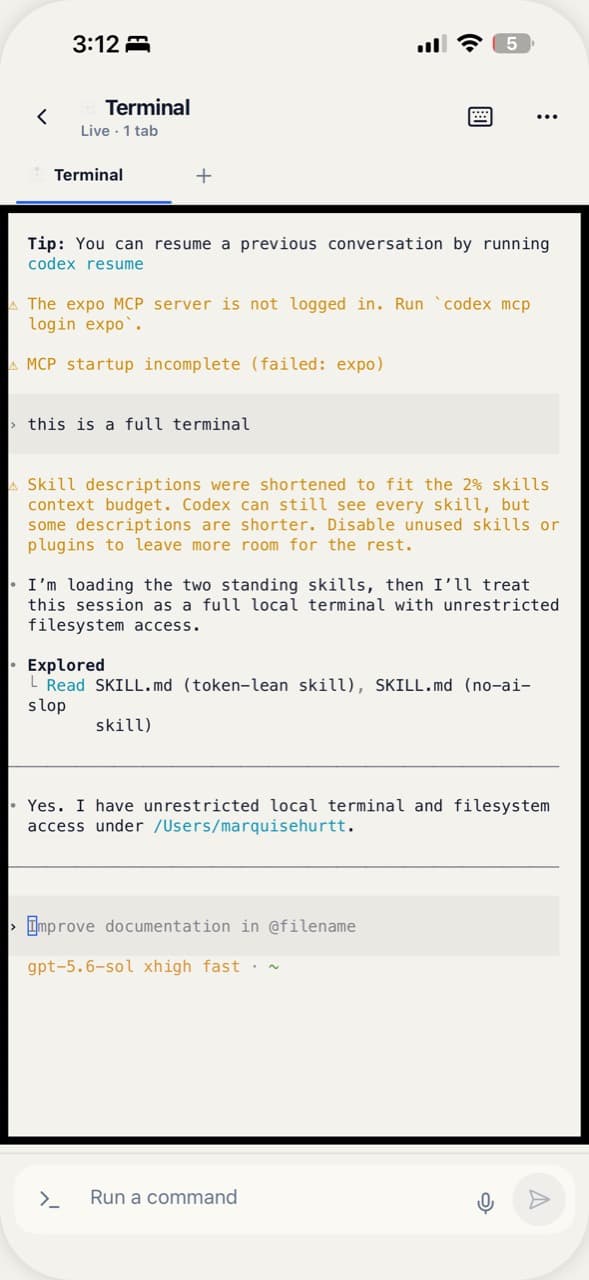
Catch up on every repo, ask Symon what changed, approve the next move, or open a live terminal. Your Mac keeps running the work while your phone keeps you in the room.
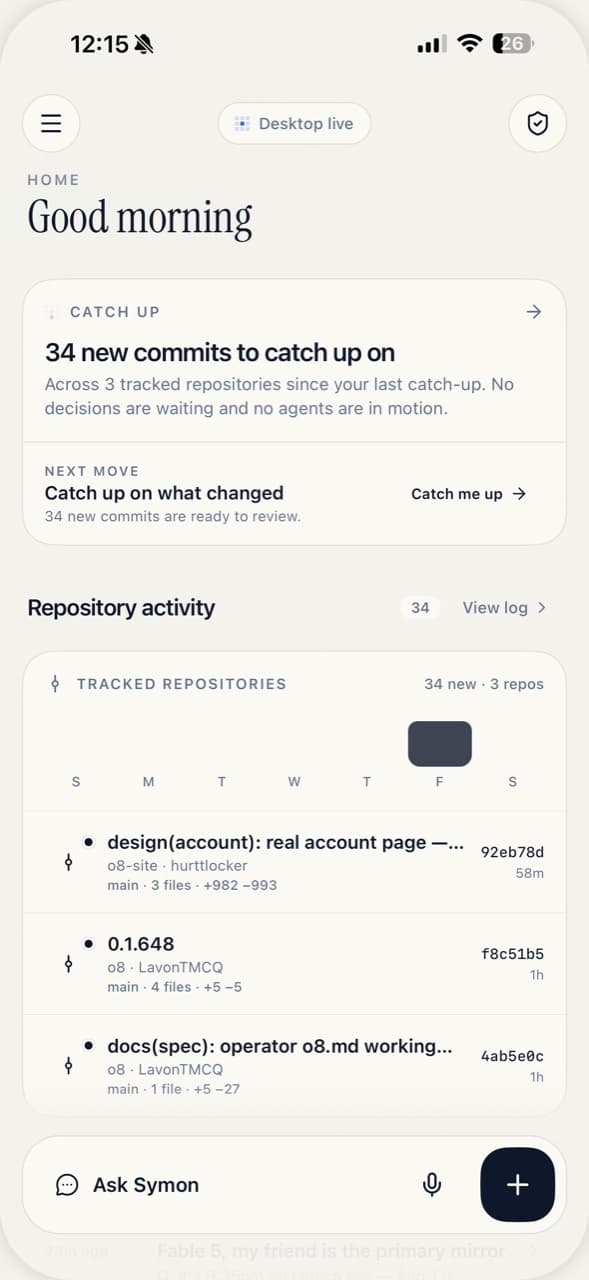
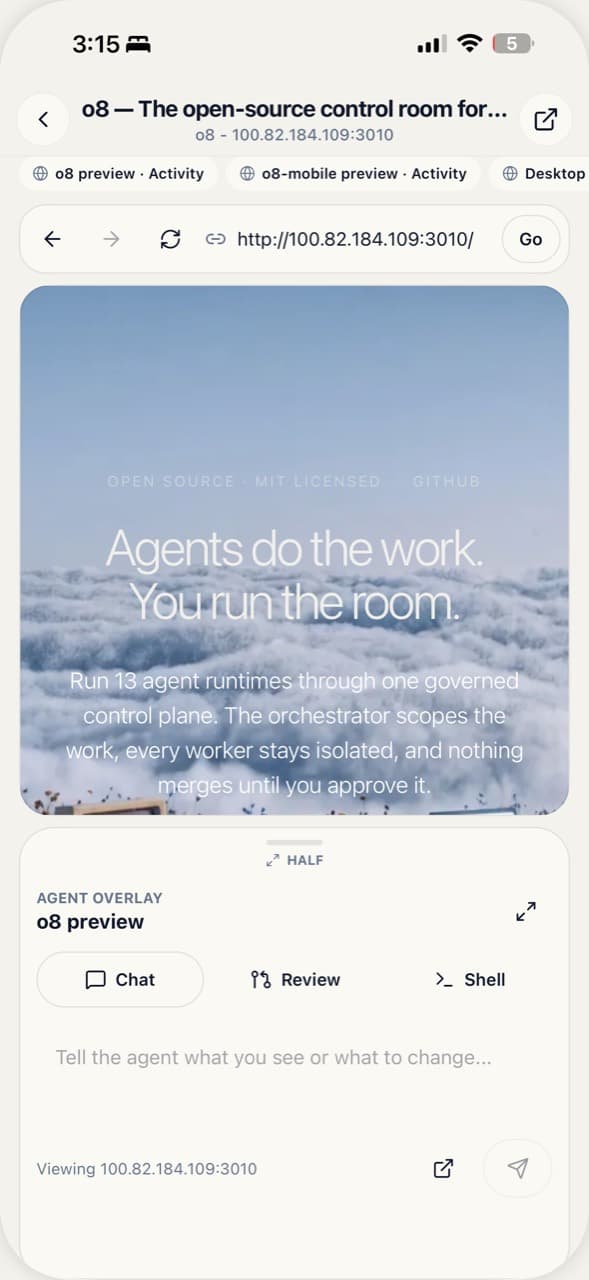
Mobile starts with the information that needs you now. Catch up on new commits, see repository activity, and reopen the exact session where the work is happening.
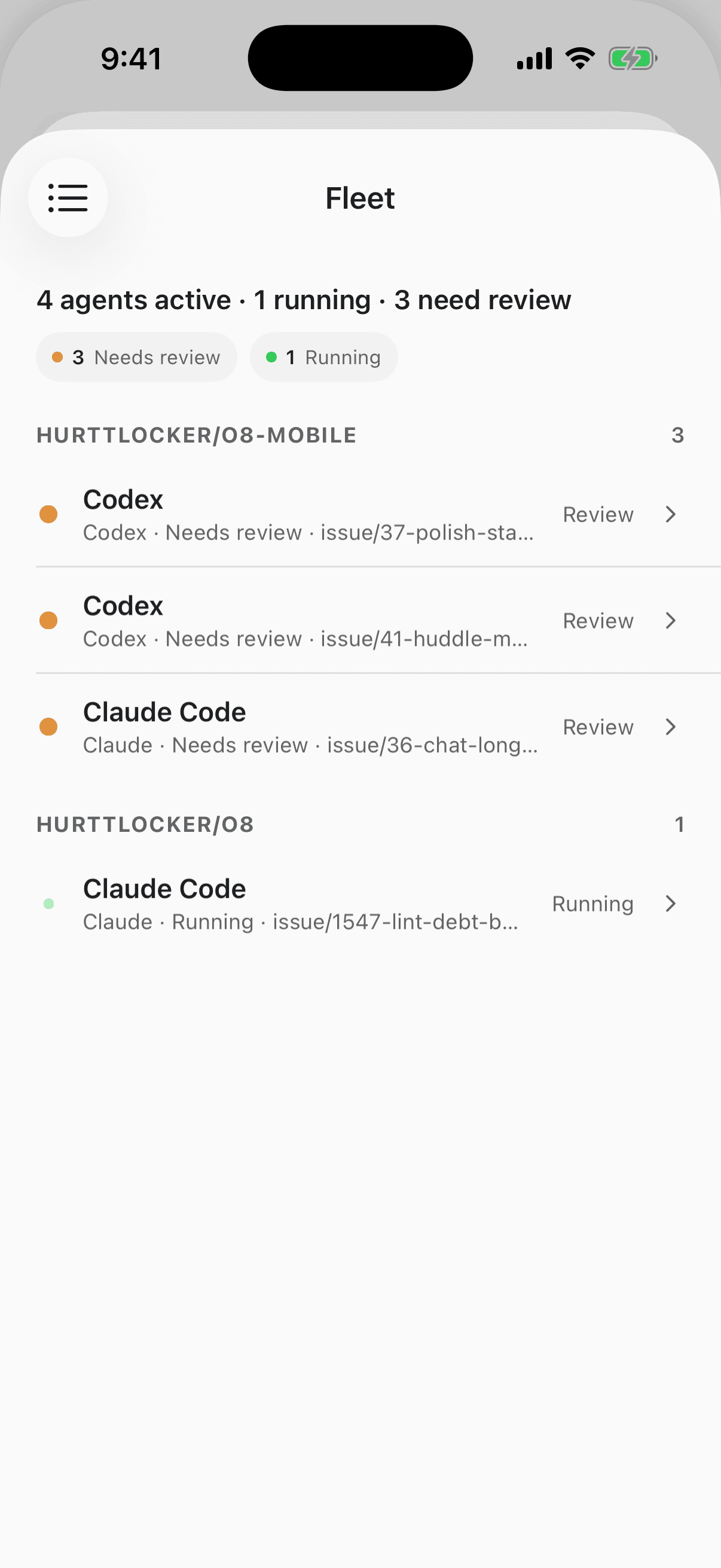
New commits and tracked repositories arrive as one brief, so you can read the change before deciding what happens next.
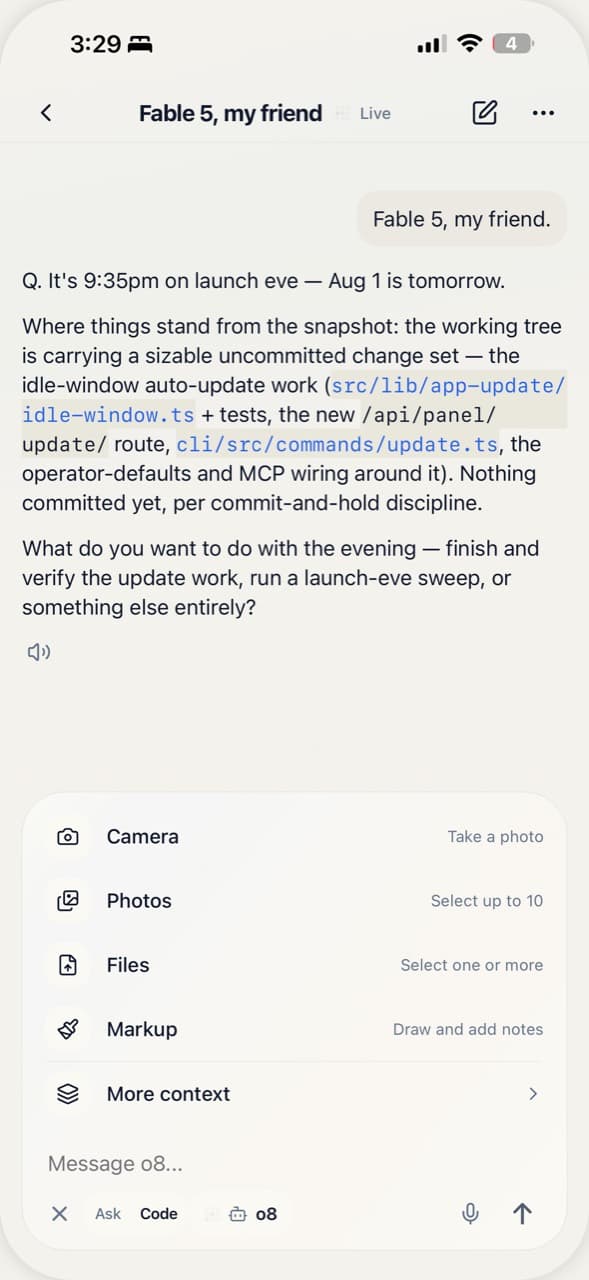
Open the same orchestrator session that is running on your Mac and keep the conversation moving from the phone.
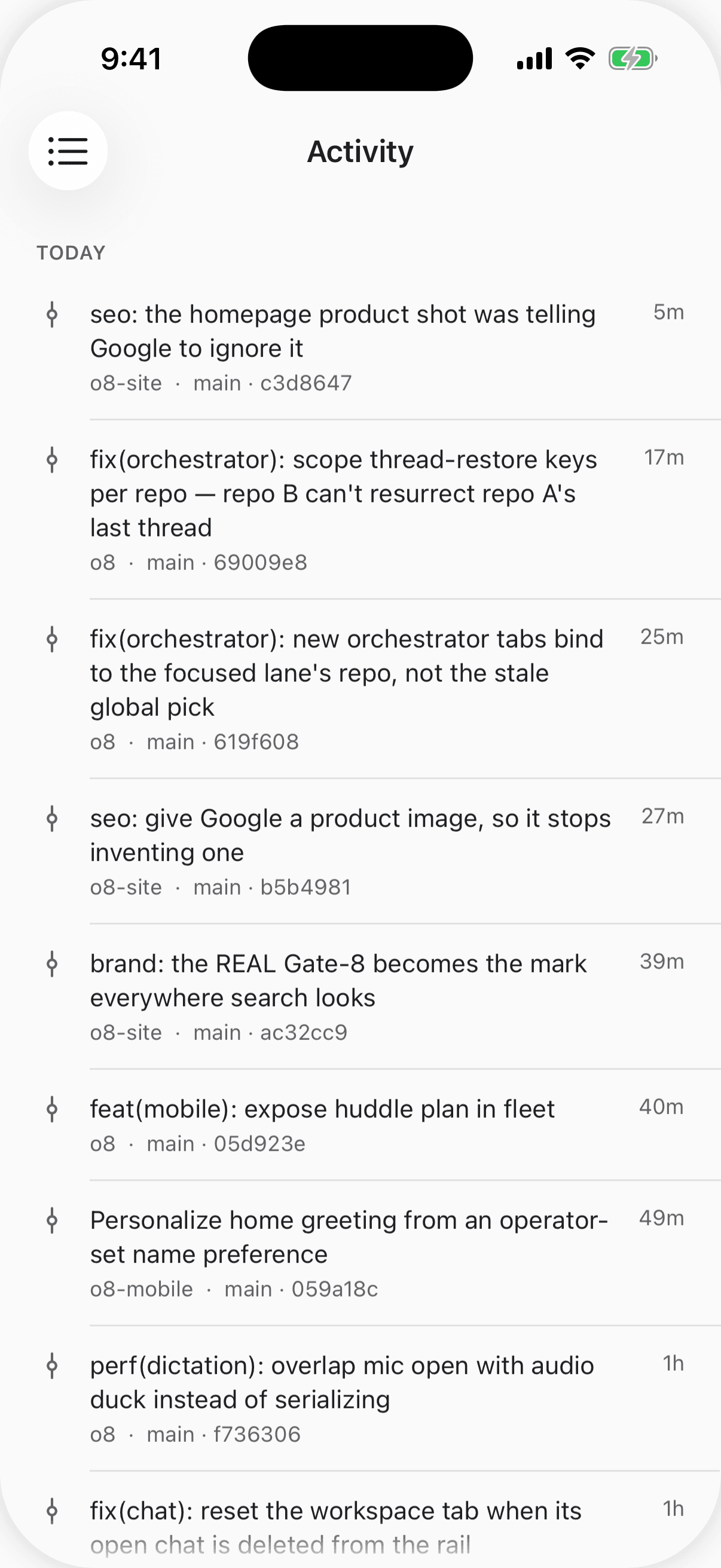
Branches, commits, reviews, and completed work stay attached to the repo that produced them.
Ask what changed and let Symon read the answer aloud. When a tool needs permission, allow it or stop it from the same conversation.
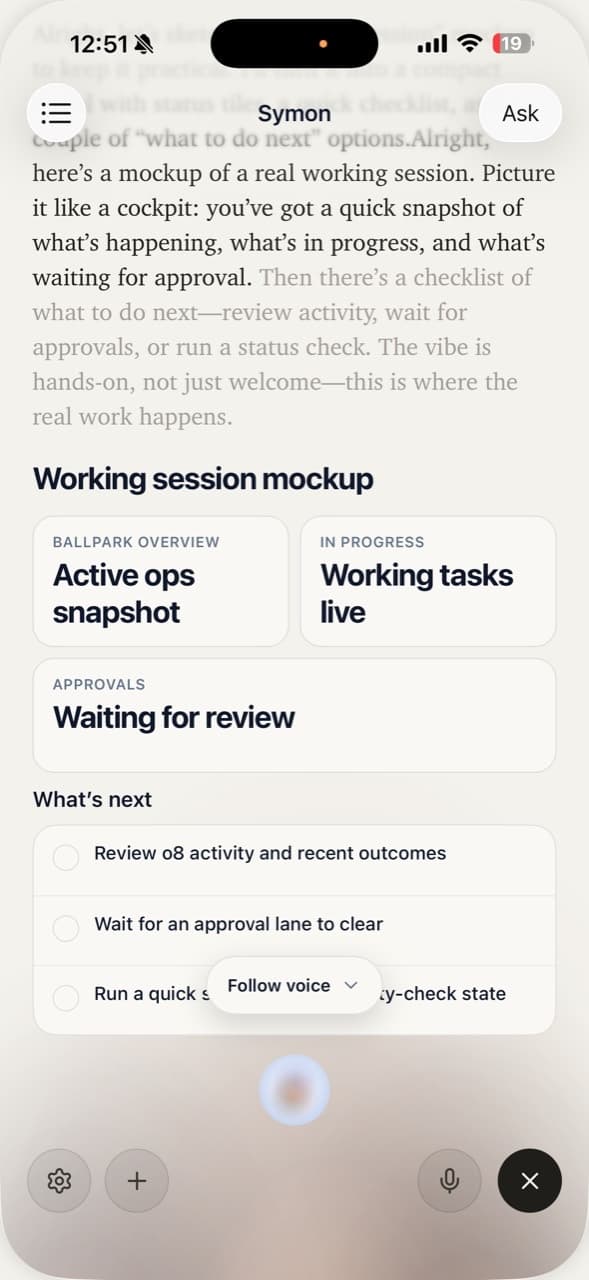
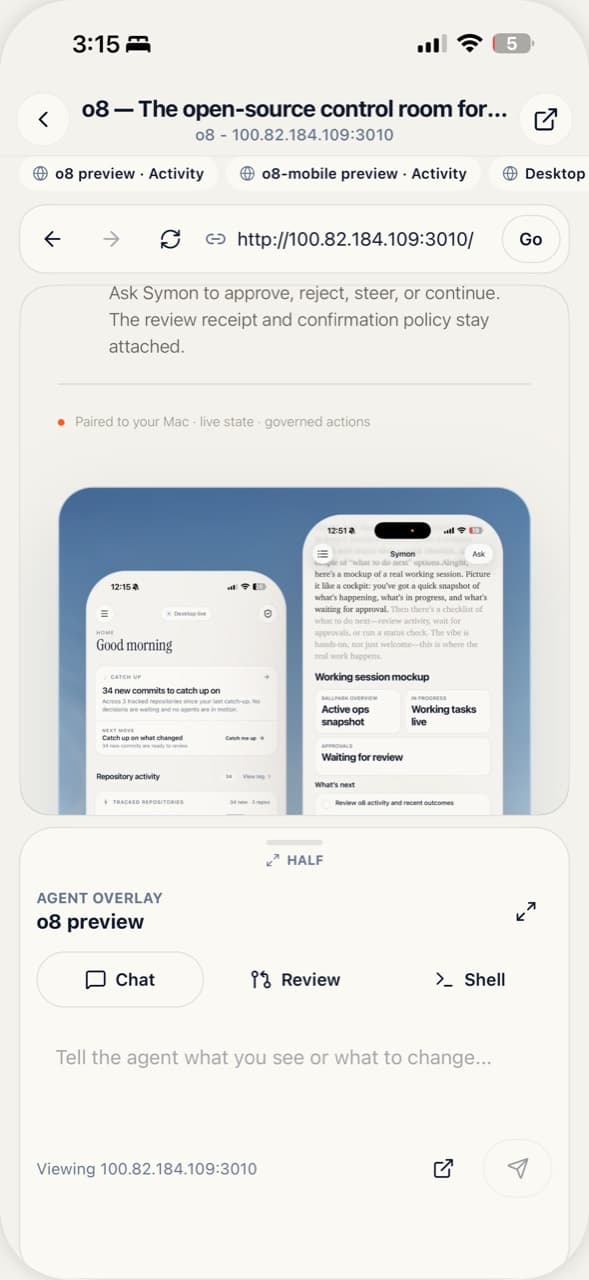
The front page stays calm. Files, fleet state, and a real terminal are there when the work calls for them, without turning every check-in into a dashboard.
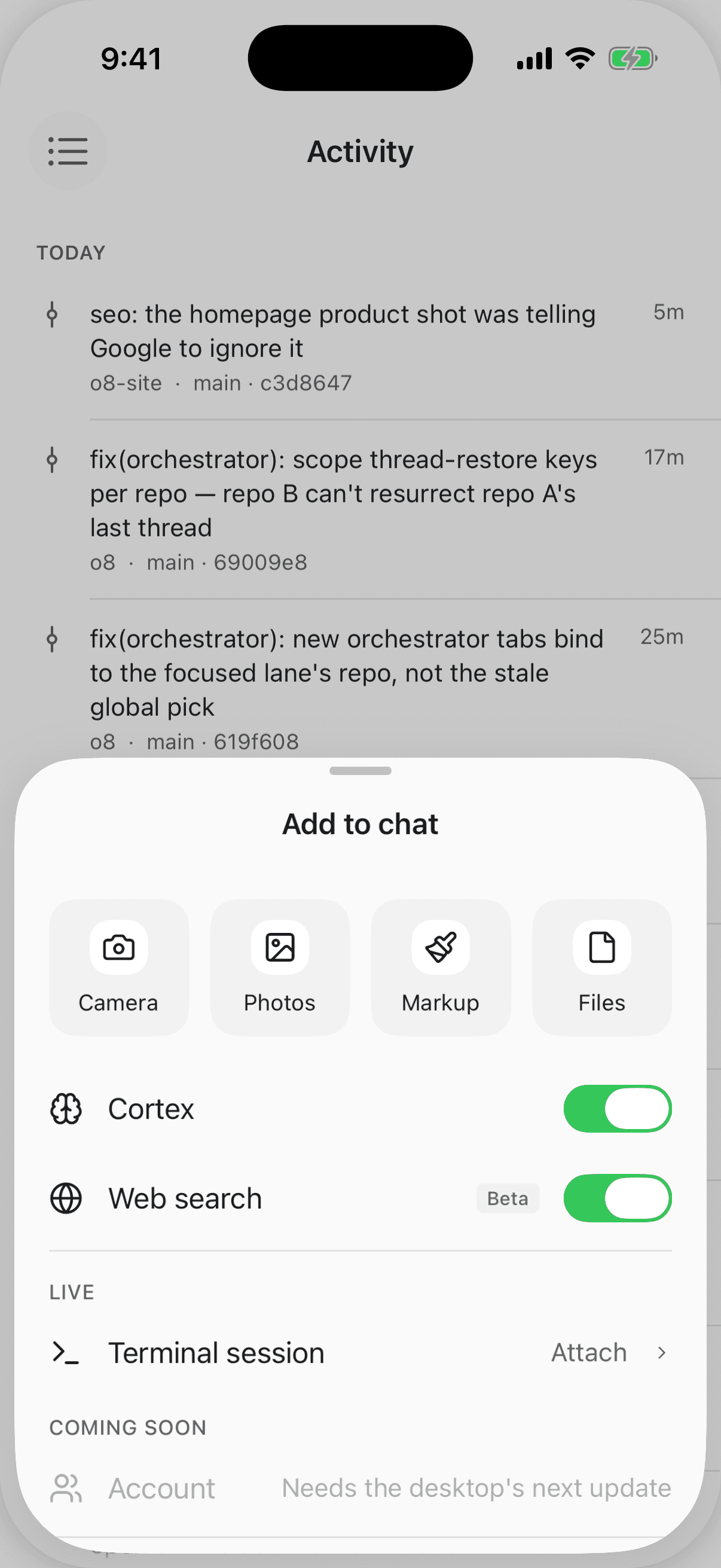
o8 mobile is in open beta on TestFlight. Install TestFlight, join with the link, then pair the app with o8 on your Mac.